What Is Chemical Earthing? Complete Guide About Electrode, Price & Installation
Maintenance Free Chemical Earthing protects your electrical equipment,
buildings, industries and solar plants from electric shocks,
fault currents and lightning. It is one of the most reliable
grounding systems available today.
Chemical Earthing uses specially designed conductive compounds
together with high-quality Copper Bonded or GI Electrodes to
maintain low earth resistance throughout the year and provide
long-lasting performance.
Compared to conventional earthing, Chemical Earthing requires
very little maintenance, offers better corrosion resistance,
and delivers consistent grounding performance in all types
of soil conditions.
Chemical Earthing Definition, Electrode & Installation Process
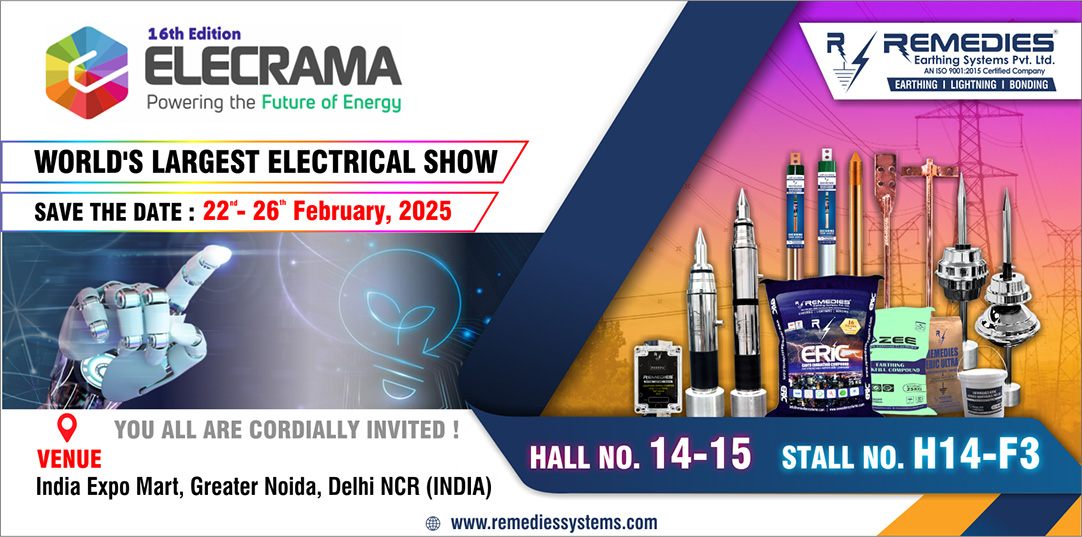
It uses specially designed chemical compounds and high-quality copper-bonded or galvanized iron (GI) electrodes to maintain low earth resistance and deliver reliable, long-lasting performance. Remedies Earthing Systems offers the best Maintenance Free Chemical Earthing solutions.
If you are interested in buying Chemical Earthing materials, contact Remedies Earthing Systems Pvt. Ltd. We are an ISO-certified company and a trusted name in the Lightning Protection and Earthing industry with over 19 years of experience.
Website:
www.remediessystems.com
Chemical Earthing Advantages & Benefits
- It is totally maintenance free.
- Corrosion resistant and maintains low earth resistance for a long period.
- Highly reliable for human safety.
- Provides more surface area for conduction.
- Adequately galvanized and highly conductive.
- Designed to handle high peak current and maximum fault current dissipation.
- Controls Radio Frequency Emissions (RFI) and Electromagnetic Interference (EMI).
- Provides stable reference potential for instrument accuracy.
- Safely discharges short-circuit currents.
- Fit and Forget solution.
Difference Between Chemical Earthing & Traditional Earthing
| S.No. |
Chemical Earthing Electrode |
Traditional Earthing |
| 1 |
Highly galvanized conductor with conductive compound. |
GI/CI Pipe of particular diameter. |
| 2 |
Electrode surrounded by non-corrosive conductive material. |
Electrode remains in direct contact with soil. |
| 3 |
Low earth resistance remains stable. |
Earth resistance increases with time. |
| 4 |
More than 100-micron corrosion protection. |
15-micron galvanized GI pipe generally used. |
| 5 |
Backfill compound is water-insoluble and remains effective. |
Salt & charcoal wash away during rainy seasons. |
| 6 |
Maintenance free and long lasting. |
Requires frequent maintenance. |
What Is Chemical Earthing Electrode?
Chemical Earthing Electrode is a modern maintenance-free earthing system that protects electrical equipment, buildings, industrial plants, data centres, hospitals, telecom towers, solar plants and other electrical installations from lightning strikes and electrical faults.
A highly conductive earthing backfill compound is used together with Copper Bonded or GI electrodes. The compound retains moisture and maintains low earth resistance throughout the year.
Chemical grounding offers better corrosion resistance, a longer service life and safely dissipates fault current and lightning energy into the ground.
Frequently Asked Questions (FAQ)
1. What Is Chemical Earthing?
Chemical Earthing is a modern maintenance-free grounding system that protects electrical equipment, buildings and human life against electrical faults and lightning strikes.
2. Why is Chemical Earthing Necessary?
It protects people and electrical equipment from electric shocks, short circuits, leakage current and lightning damage.
3. What Are the Benefits of Chemical Earthing?
- Low earth resistance
- 15–20 years service life
- Very low maintenance
- Excellent corrosion protection
- Suitable for all soil conditions
- Better lightning and fault current protection
4. Where Is Chemical Earthing Used?
- Industrial Units
- Schools
- Solar Power Plants
- Hospitals
- Data Centres
- Telecom Towers
- Commercial Buildings
- Residential Projects
- Substations
Is It Necessary to Pour Water into Chemical Earthing?
Normally, chemical earthing does not require regular watering. However, this depends upon the product quality and site conditions.
How Do You Choose a High-Quality Chemical Earthing System?
A quality chemical earthing system should maintain low earth resistance, safely dissipate fault current and lightning energy, resist corrosion, and provide long-term protection for electrical systems.
What Is the Process of Chemical Earthing?
Chemical Earthing is a modern grounding technology in which fault current and lightning current are safely transmitted into the earth through a specially designed electrode and conductive backfill compound.
Contact Remedies Earthing Systems Pvt. Ltd.
Website:
www.remediessystems.com

 Inquiry